레이블이 Photography인 게시물을 표시합니다. 모든 게시물 표시

2015년 5월 28일 목요일

Adobe Free English Fonts


2015년 4월 1일 수요일

[Huffingtonpost] 10 Things to Do in Stockholm, Sweden

Jinna Yang Headshot

10 Things to Do in Stockholm, Sweden

Posted: Updated: 
Stockholm -- the most stylish city I've ever had the pleasure of visiting (if you've followed my journey on instagram: @greaseandglamour -- you'll have seen my daily updates). Here are 10 things I think you should do when you visit.
1. Catch the sunset if you can.
In the five days I was in Stockholm, we were only to see the sunset once. So if you are blessed with clear skies while you're there, do take a few moments to soak in the sunset.
Sunset in Sodermalm, Stockholm | TRAVEL

2. Sip a latte at Drop Coffee, rated the 3rd best coffee shop in the world.
They didn't have soy milk or almond milk (usually how I drink my latte), but they did have 'oat milk' which I thoroughly enjoyed. :)
Drop Coffee | Stockholm

3. Take a burger break at Vigarda Barbeque.
I got the original burger (expecting, you know - an original cheeseburger), and to my surprise, I'm blessed with a lump of delicious pulled pork sandwiched in-between a perfectly grilled beef mound and toasted bun. Yum.
Vigarda Barbeque | Where to Eat in Stockholm

4. Do get a Swedish hotdog in the street.
'cause it's damn good.
Swedish Street Hot Dog | What to Eat in Stockholm

5. Walk the bridge over to Sodermalm to soak in this view at night.
There is water everywhere in Stockholm, and the lights reflecting off of that water is always absolutely magical.
Stockholm at night |Travel

6. Take the metro whenever you can.
Traveler-friendly - there aren't too many trains going in completely different directions, most stations notify of you how long until the next train comes, and the trains are clean plus have padded seats.
Stockholm Metro
...and because cabs are WAY TOO EXPENSIVE.
Stockholm, Sweden | Travel

7. Dance 'til you drop.
If you're in town for the weekend, do go out and dance 'til you drop. Most Stockholm locals don't go out late during the week, and many bars close at 1 AM. But the weekend nightlife can keep you out as late as 5 AM.
Check out Berns (multi-floor nightclub) and Trädgården (multi-floor club under a bridge).
Dancing in Stockholm | Travel

8. Go shopping, anywhere.
Stockholm is home to some of the best shopping in the world. The design is minimal, well-fitted, tailored and overall sleek.
My favorite area to shop was in the neighborhood of Ostermalm - a bit on the pricier end, but if you're used to paying foreign prices on Swedish designer items, you'll be glad to find that the Swedish brands you love are much cheaper in Stockholm.
Shopping in Stockholm | Travel
Shopping in Stockholm

9. Explore Gamla Stan, the old town in Stockholm.
Complete with cobblestone streets, beautifully bright buildings contrasted against a usually grey sky - this neighborhood has a Scandinavian charm that you'll love.
Galma Stan | Stockholm | Travel
Gamla Stan, Stockholm | Sweden | Travel

10. Eat at Nook in Sodermalm.
Started by a Swede and a Korean, this restaurant combines Swedish cuisine with Korean flavors. I'm not always a fan of fusion, but this place was awesome.
Where to Eat in Stockholm | Nook | Travel
Nook Restaurant | Stockholm | Travel
Where to Eat in Stockholm
Eating in Stockholm | Nook Restaurant | Travel
Want to see more awesome photographs? Join this community on Facebook , and follow me on Instagram: @greaseandglamour for daily photo updates.
This article was originally posted on GreaseandGlamour.com.

With love,
Jinna

2014년 12월 20일 토요일

[The Atlantic] The Year in Drone Videos

The Year in Drone Videos

A tour of the best unmanned aerial cinema from around the world
Quartz
Drone photography came into its own this year.
Quadcopters with cameras got better and cheaper, turning more people into drone hobbyists and professional aerial videographers. Drones were used for cityscapes, nature walks, concerts, real-estate listingsdisaster surveysOlympic sports—even self-portraiture, as selfies taken from the air became known as “dronies.”
With so many drone videos out there, picking the best of the year is a difficult task. To make our list, a video had to distinguish itself with a creative location, approach, or circumstance. Some drone videographers just got lucky (or unlucky, as the case may be). Others brought particular skill to an unusual place.
The popularity of drone videos can be partially explained, yes, by their novelty. (And their newfound ubiquity inevitably gave rise to complaints.) But at their best, drones provide a compelling vantage that captivates viewers and points in a new and creative direction for journalism and cinematography.
The following were the best drone videos released in 2014.

An Illicit View of Beijing

Drones aren’t allowed to fly over many parts of Beijing, least of all the Forbidden City. The photographer who took this video, Trey Ratcliff, was detained by policeafter he flew close to government buildings. Fortunately, he was allowed to keep the footage he shot over five days and offer the world this rare perspective on Beijing.
A Rockfall in Northern Italy

A cliff collapsed at the beginning of the year in the small town of Tramin (also known as Termeno) in South Tyrol, Italy, sending boulders and small rocks tumbling through fields—and, in one case, straight through a 300-year-old barn. This drone footage surveyed the surreal damage in an attempt to raise money for relief efforts.
An Abandoned City Near Chernobyl

Pripyat, Ukraine, was evacuated in 1986 after the Chernobyl nuclear power plant meltdown. Danny Cooke shot this video while visiting for the CBS TV news program 60 Minutes, which produced a segment about the continuing effects of radiation in the area. What Cooke found was a city frozen in time and left to decay but still displaying its humanity.
Fireworks on the Beach in Florida

“The quad was not damaged,” said Jos Stiglingh, who sent his quadcopter into the middle of an extravagant fireworks display in West Palm Beach, Florida. The resulting footage offers a perspective on a pyrotechnics show that’s usually seen from a much safer distance.
Taking to the Streets of Hong Kong
Hong Kong’s Umbrella movement seemed to catch everyone off guard, from its student leaders to the Chinese government. The scope of the protests wasn’t clear at first, but this video, shot by Nero Chan, helped make it clear to the rest of the world. He posted it to Facebook with the status: “feeling hopeful.”
Skimming the Waves on a Thai Island
Philip Bloom took his gear to Koh Yao Noi, Thailand, an island off the coast of Phuket, and shot an enchanting video that’s most notable for how close to the ground the drone hovers.
PRESENTED BY

[The Guardian] Photography is art and always will be by Sean O' Hagan

Photography is art and always will be

Do Jane Bown, William Eggleston and Diane Arbus not sing on a gallery wall? Photography critic Sean O’Hagan hits back at Jonathan Jones’s damning claim that photographs cannot be considered fine art
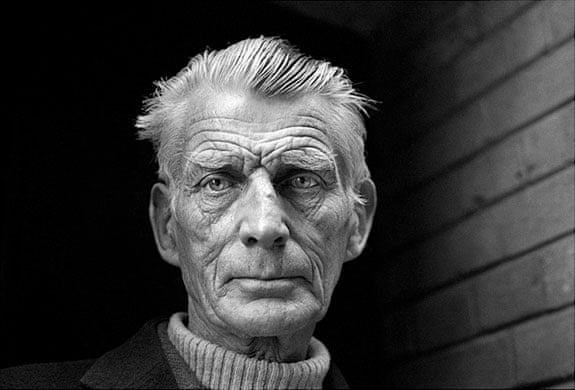
Samuel Beckett.
 Still intensity … Samuel Beckett. Photograph: Jane Bown
Imagine, if you will, the following scene. I pop into the National Gallery to view the 2014 BP National Portrait Award and look in bemusement at the exhibition, which is mostly comprised of rather old-fashioned paintings. It’s an uninspiring show, a hotchpotch, as are most exhibitions drawn from open submissions. Inexplicably enraged by this, I rush home and pen an article claiming that painting is dead and that it looks anachronistic, indeed stupid, on a gallery wall in the 21st century. Not only that, but I then extrapolate that all painting is dull and stupid – Caravaggio, Rubens, Picasso, Hockney, Richter, the lot.
Robert Frank in America.
Pinterest
Iowa, 1956. Photograph: Robert Frank
In November, our art critic Jonathan Jones went to see the wildlife photographer of the year show at the National History Museum and the Taylor Wessing prize at the National Portrait Gallery – an open submission award known for its eccentric shortlist, usually featuring people with their pets. Quite why he chose to visit these two shows eludes me. Did he think they were art photography exhibitions? He castigated both, as I, a photography critic, would probably have done had I the energy to kick a few dead horses.
I did not respond back then for two reasons: the “photography is not art” debate is so old it’s hardly worth revisiting, and the idea of using a wildlife award show as a yardstick just seemed bizarre. But, alas, he has repeated his claims this week,discussing a rather boring photograph by Peter Lik, which sold for £4.1m, becoming the most expensive photograph in the world. To which my response is: so what? It’s global capitalism – obscenely rich people with more money than sense. Or taste. For Jonathan, though, “This record-setting picture typifies everything that goes wrong when photographers think they are artists”. No it doesn’t. Here are a few artists who use photography: Cindy Sherman, Jeff Wall, Gillian Wearing. Here are a few photographers, off the top of my head, whose work is art: Julia Margaret CameronEdward SteichenWilliam EgglestonNan GoldinRobert FrankStephen ShoreDiane ArbusPaul GrahamHiroshi Sugimoto. Their work sings on the gallery wall. Their work makes you look at the world differently.
Photograph by William Eggleston, 1972.
Pinterest
Biloxi, Mississippi, 1972. Photograph: William Eggleston. © Eggleston Artistic Trust. Courtesy of The Wilson Centre for Photography
Several things are wrong about Jonathan’s reasoning, not least that he still thinks painting is in some sort of competition with photography. How quaint. He also seems to think that all photography is derivative of painting. This is plainly not so. A great photograph by William Eggleston, though he claims to be influenced by abstract painting, occupies its own space, makes its own rules.
A group of Kalutara peasants, 1878.
Pinterest
A group of Kalutara peasants, 1878. Photograph: Julia Margaret Cameron/Royal Photographic Society
Jonathan writes that photographs look better on a computer screen than in a print. Some do, but most do not. Has he never stood in wonder in front of a Julia Margaret Cameron portrait? I doubt it. Has he ever seen a painting or drawing of Samuel Beckett that possesses the stillness and intensity of the great photographic portrait of Samuel Beckett by John Minihan or Jane Bown? I expect not.
He makes no distinction between types of photography, and seems unaware, that photography has changed utterly since Henri Cartier-Bresson. Look at the politically charged conceptualism of Broomberg and Chanarin, the playful invention of a fictional series by Joan Fontcuberta, the wonderful artists books made by the likes of Cristina de Middel or Viviane Sassen. Photography is as vibrant as it has ever been - more so in response to the digital world, which Jonathan mistakenly thinks has made everyone a great photographer. It hasn’t. It has made it easy for people to take – and disseminate – photographs, that’s all. A great photographer can make a great photograph whatever the camera. A bad one will still make a bad photograph on a two grand digital camera that does everything for you. It’s about a way of seeing, not technology.
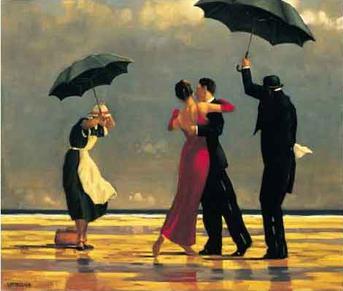
Why damn photography because of the excesses of the auction houses and mega-rich collectors? Do we measure the health of contemporary art by the price paid for Hirst’s vulgar diamond skull? Or a Jack Vettriano? I have seen some idiotic installation pieces over the years, but that doesn’t mean that all artists who make installations are idiots and their work dull and stupid.
If anything is anachronistic, it’s the “photography is not art” debate. Warhol’s Polaroids and Ruscha’s deadpan photography books put it to bed years ago. I wish Jonathan had come with me to a group show I saw at Purdy Hicks this year called Natural Order. There were some good paintings and uncannily detailed drawings, but Awoiska van der Molen’s nightscapes made on long exposures in the volcanic islands of La Gomera and La Graciosa were breathtaking in their stillness and sense of mystery. So strong that everything on the walls around them seemed muted. I think that’s what art does, right?